Ducted Air Conditioning Installation
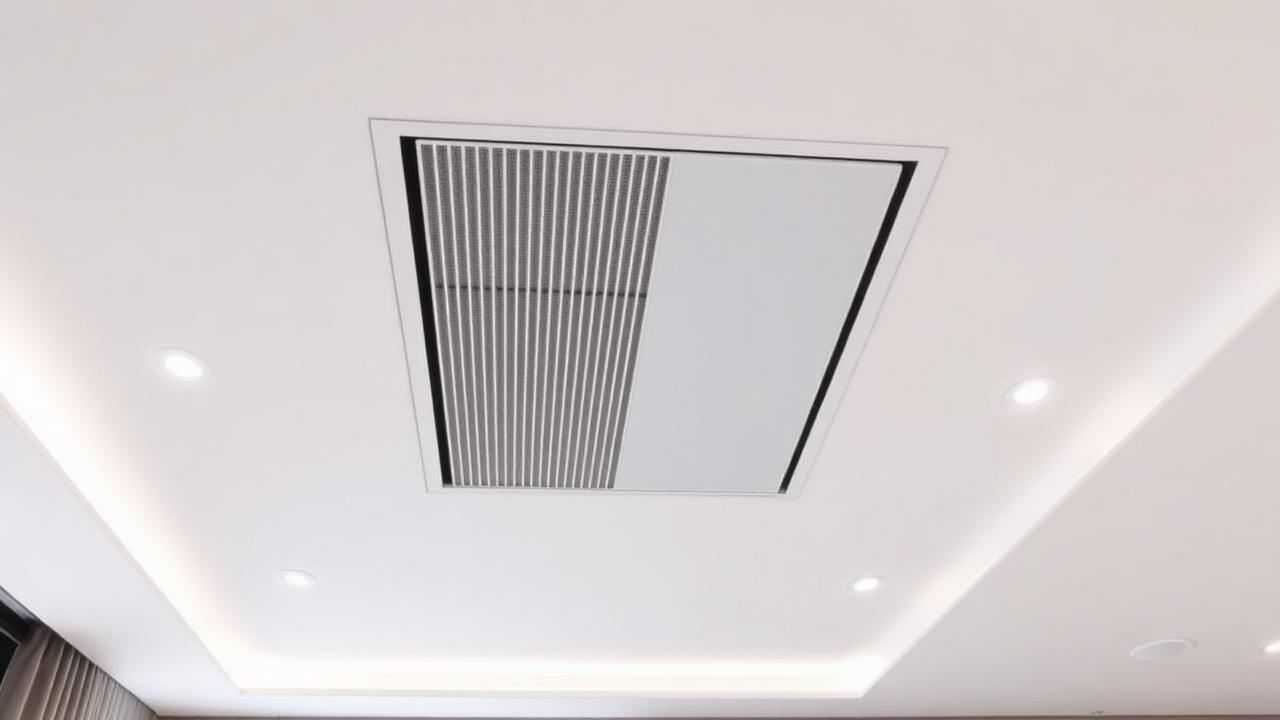
The most discrete air conditioning format — the indoor unit lives in a loft or bulkhead ceiling and delivers conditioned air through insulated ductwork to slim grilles in each room.
From £4,500 per zone
Fixed-price quote, held to the day.
5–10 days
Typical timeline from survey to commissioning.
5-Year Warranty
Parts and labour covered on every install.
F-Gas Certified
REFCOM-registered engineers on every job.
- Fully hidden — only grilles are visible
- One indoor unit serves multiple rooms
- Whisper-quiet at 24–30 dB per grille
- Highest resale value for premium homes
Why choose this
- Fully hidden — only grilles are visible
- One indoor unit serves multiple rooms
- Whisper-quiet at 24–30 dB per grille
- Highest resale value for premium homes
What's included
- Loft or ceiling-void indoor unit
- Insulated flexible ductwork per room
- Linear or square supply/return grilles
- Zoning dampers for per-room control
When ducted is worth the premium
Ducted systems cost roughly double a wall-mounted equivalent because of the ductwork, plasterwork, grilles and the specialist labour needed to install them. For premium refurbishments, listed buildings where wall units aren't acceptable, and any home where interior design leads over budget, ducted is the only option.
Estate agents routinely tell us ducted AC adds 3–5% to sale price on properties above £1m in the London market. Wall-mounted units add nothing — they are functionally identical but read as intrusive to prospective buyers viewing photography and floorplans.
Ceiling void and duct sizing
We need a minimum 250 mm ceiling void for the flexible ductwork plus insulation. In two-storey homes this typically means dropping the first-floor ceiling by 300 mm in a corridor or utility zone to hide the plenum and main trunk. A single 10 kW ducted unit typically serves 3–5 rooms with 150–200 mm ducts to each grille.
Duct sizing is critical — undersized ducts create air noise that will haunt you forever. Our rule is 3.5 m/s maximum air velocity in the branches and 5 m/s in the main trunk. Anything faster whistles at grilles and hisses through diffusers. We upsize by one nominal duct diameter as standard rather than trim to the theoretical minimum.
Zoning and control
Motorised dampers in the duct branches allow per-room zoning. Each zone gets a wall controller with individual temperature and occupancy scheduling. When only two of five zones are calling for cooling, the unit ramps down accordingly — inverter compressor modulation handles the reduced load efficiently.
We integrate zoning with modern smart-home platforms — SmartThings, HomeKit, Home Assistant and Google Home all support zone-level control via manufacturer bridges. Scheduling can be scene-driven ('Good night' scene drops setpoint by 1 °C in bedrooms and turns off living zones) rather than clock-based.
Grille and diffuser selection
Grilles are the only visible part of a ducted system — get them wrong and you compromise the entire aesthetic case for going ducted. We stock linear slot diffusers in 600 mm to 2400 mm lengths (from ~£95 to ~£420 each) as well as square jet diffusers, egg-crate returns and bespoke architectural grilles for high-end projects.
Linear slot diffusers in stretched-plaster ceilings are the current premium look — they disappear visually when off and produce almost silent air throw when active. For traditional interiors we favour square 300×300 mm grilles in RAL-matched paint. Every grille is throw-tested during commissioning to confirm draught-free comfort at seated head height.
Retrofit vs new build
New-build ducted installs are straightforward — coordinated on drawings with the structural, electrical and plumbing trades before ceilings close. Retrofit is more complex but achievable in most Victorian and Edwardian homes with generous ceiling heights that can absorb a 250–300 mm drop in a corridor bulkhead.
1960s and 1970s builds with 2.3 m stock ceilings are the tightest — we sometimes route ductwork through purpose-built cornice bulkheads at wall/ceiling junctions to preserve central ceiling height. In loft conversions, the ducted unit lives horizontally in the eaves void with ducts routed down party walls.
Servicing and filter access
Every ducted unit needs an access hatch for filter, drain pan and PCB access. We locate the hatch above a hallway, wardrobe or utility area — never above a lounge or bedroom. Standard hatch size is 500×500 mm with a magnetic close and flush-plaster finish.
Filters are washable synthetic type — a service technician swaps and cleans them at every annual service (included in our £220 per year ducted service plan). Between services the filter dashboard on the app warns of pressure drop above the 60 Pa threshold — you know when to book in without waiting for the calendar.
Duct materials — flexible, spiral or rectangular
Three main ductwork options carry conditioned air from the indoor unit to grilles: (1) insulated flexible ductwork — cheapest and easiest to install through tight spaces, 6-inch minimum bend radius, ideal for ceiling voids under 300 mm; (2) spiral galvanised steel ductwork — quieter and lower pressure drop, better for long runs and higher-end fit-outs; (3) rectangular sheet-metal ductwork with external insulation — used for very large ducts (>400 mm) and industrial applications.
Our default for domestic ducted is 200 mm spiral galvanised for the main trunk with 150 mm flexible branches to each grille. This combination hits the acoustic and pressure-drop targets without inflating the ceiling void requirement. We upsize to 250 mm main trunk on installations serving 5+ rooms.
Fresh-air integration and MVHR pairing
A ducted AC indoor unit can accept a fresh-air spigot on its return-air plenum, allowing filtered outside air to be introduced at controlled rates. For premium homes we pair the ducted AC with a dedicated MVHR unit — 85%+ heat recovery on exhaust air plus filtered fresh air distributed through the same duct network to the same grilles.
The combined system delivers fully conditioned, filtered fresh air to every room at 15–20 l/s per person — meeting the highest indoor air quality standards including WELL Building Standard air quality credits. Running cost of MVHR is modest (35 W per unit) and heat-recovery savings typically exceed the fan energy by a factor of 6–8 over a heating season.
Retrofit challenges and solutions
Retrofitting ducted into an existing occupied home is more involved than new-build but almost always achievable. The three constraints we work around are: ceiling void depth (need 250 mm minimum for the main trunk), pipe/electrical routing to the indoor unit (usually via a discreet vertical service riser), and access hatch positioning for future service (must be above a hallway, wardrobe or utility area).
On homes where suspended ceilings are not viable we sometimes route ductwork inside newly-built decorative bulkheads at the wall/ceiling junction — treated as a cornice detail rather than a service void. Coordinated with sensitive lighting design, the result reads as intentional architecture rather than compromised engineering.
Design for acoustics — the make-or-break detail
Ducted systems live or die on acoustic performance. Poor acoustic design produces whistling grilles, roaring returns and low-frequency drone from the indoor unit that carries through the building's fabric. Good design delivers a system so quiet occupants forget it exists.
Our acoustic strategy operates on four fronts: (1) oversize ducts by one nominal diameter to keep velocity below 4 m/s; (2) install acoustic lining inside the first 3 m of supply and return ducts adjacent to the indoor unit; (3) use flexible connectors between the indoor unit and rigid ductwork to break vibration transmission; (4) install anti-vibration mounts under the indoor unit itself. The combined result: measured NR20 or lower at every grille location, indistinguishable from a passively ventilated room to the human ear.
We measure acoustic performance at commissioning with a calibrated Class 2 sound meter and report figures to the client. Any deviation from the design specification triggers investigation and correction under our workmanship warranty — not deferred to occupation and eventual complaint.
Frequently asked questions
Can it be retrofitted?+
Yes, into loft spaces above the top floor. For lower floors, retrofitting almost always requires dropping ceilings — usually planned around a wider refurbishment.
How loud are the grilles?+
24–30 dB at grille face when properly sized. Undersized ducts cause air noise — we always upsize by one duct diameter.
How long does a ducted install take?+
5–10 working days for a typical whole-home retrofit including plaster reinstatement. New-build coordinated with other trades can be faster.
Do the grilles collect dust?+
No more than any air vent. A wipe with a damp cloth every few months keeps them clean; the filter is what catches airborne particulates.
Can I add fresh air to the ducted system?+
Yes — we can spec the indoor unit with a fresh-air spigot for connection to an MVHR unit. This gives fully conditioned fresh air, ideal for high-performance new builds.
What happens if the indoor unit fails?+
All zones are offline until repair. We hold same-brand loan units for warranty customers and can typically get a temporary AC in place within 24 hours if repair takes longer.
Can I have per-room control on a ducted system?+
Yes — motorised dampers per branch with wall-thermostat control. Full zoning adds around £250 per zone but gives independent temperature control just like separate splits.
How often do the ducts need cleaning?+
Every 5–7 years for a domestic system in normal use. Filter is cleaned annually at every service; duct interior itself stays clean because filters catch airborne dust before it enters.
Related services
Home Air Conditioning Installation
Whole-home cooling & heating with quiet inverter splits engineered for UK houses and flats.
Commercial Air Conditioning Installation
Retail, hospitality and mixed-use fit-outs — cassettes, ducted and VRF with BMS integration.
Office Air Conditioning Installation
Discrete cassette and ducted systems that keep meeting rooms cool without wall-mounted eyesores.

UK-Based Coordinators, 7 Days a Week
Our friendly team answers every call, message and booking request — day, night, weekends and bank holidays. No call centres, no bots, no waiting in a queue. Speak to a real coordinator who dispatches an F-Gas certified engineer fast.